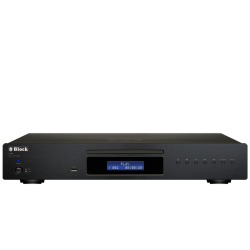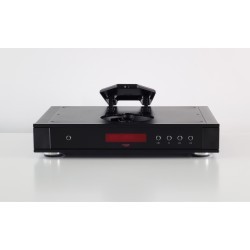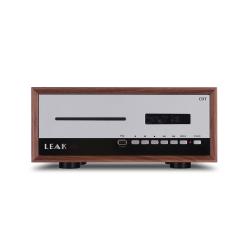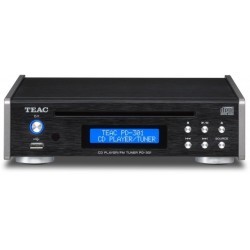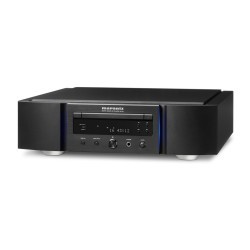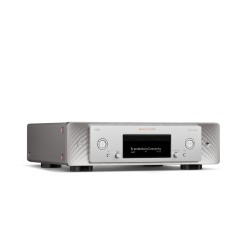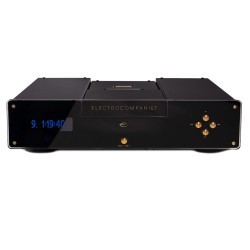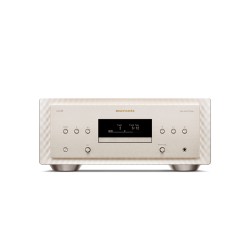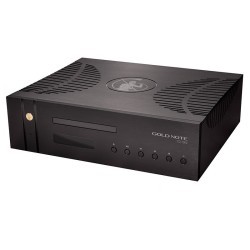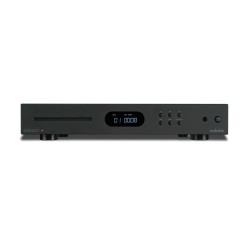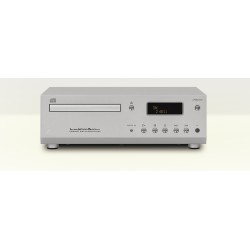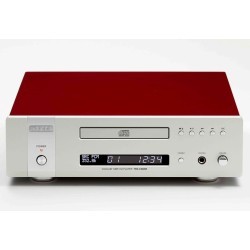


CD TRANSPORT MODEL
Our Privacy Policy explains our principles when it comes to the collection, processing, and storage of your information. This policy specifically explains how we employ cookies, as well as the options you have to control them.
Cookies are small pieces of data, stored in text files that are stored on your computer or other device when websites are loaded in a browser. They are widely used to "remember" you and your preferences, either for a single visit or for multiple repeat visits
We use cookies for a number of different purposes. Some cookies are necessary for technical reasons; some enable a personalized experience for both visitors and registered users; and some allow the display of advertising from selected third party networks.
Visitors may wish to restrict the use of cookies or completely prevent them from being set. If you disable cookies, please be aware that some of the features of our service may not function correctly
We only collect information about you if we have a reason to do so-for example, to provide our services, to communicate with you, or to make our services better.
We are committed to maintaining the trust and confidence of our website visitors. We do not collect, sell, rent or trade email lists or any data with other companies and businesses. Have a look at our Privacy Policy page to read detail information on when and why we collect your personal information, how we use it, the limited conditions under which we may disclose it to others and how we keep it secure.
We may change Cookies and Privacy policy from time to time. This policy is effective from 24th May 2018.
DETTAGLI
| CD section | |
| Supported media | Audio CD, CD (CD-R/CD-RW) * 8cm CDs not supported. |
| Digital audio outputs | |
| COAXIAL | |
| Connector | RCA × 1 |
| Output level | 0.5Vp-p |
| Output impedance | 75Ω |
| OPTICAL | |
| Connector | TOS (JEITA RC5720C) × 1 |
| Clock sync input | |
| Connector | BNC × 1 |
| Input frequency | 10MHz |
| Input impedance | 50Ω |
| Input level | |
| Rectangle wave | Equivalent to TTL level |
| Sine wave | 0.5 to 1.0Vrms |
| External control | |
| Trigger in (12V TRIGGER IN) | |
| Connector | 3.5mm Mono mini jack × 1 |
| Input level | 12V, 1mA |
| Trigger out (12V TRIGGER THRU) | |
| Connector | 3.5mm Mono mini jack × 1 |
| Output level | 12V |
| Maximum curret supply | 100mA |
| Power | AC120V, 60Hz AC220-240V, 50/60Hz |
| Power consumption | 10W |
| Standby power | 0.4W |
| Overall dimensions | 444 (W) × 111 (H) × 333 (D) mm (including protrusions) |
| Weight | 10.1kg |
| Operating temperature | +5℃ to +35℃ |
| Operating humidity | 5% to 85% (no condensation) |
| Storage Temperature range | −20℃ to +55℃ |
| Included accessories | AC cord, Remote control (RC-1338), AAA batteries × 2, Foot pads × 3, Owner's manual |
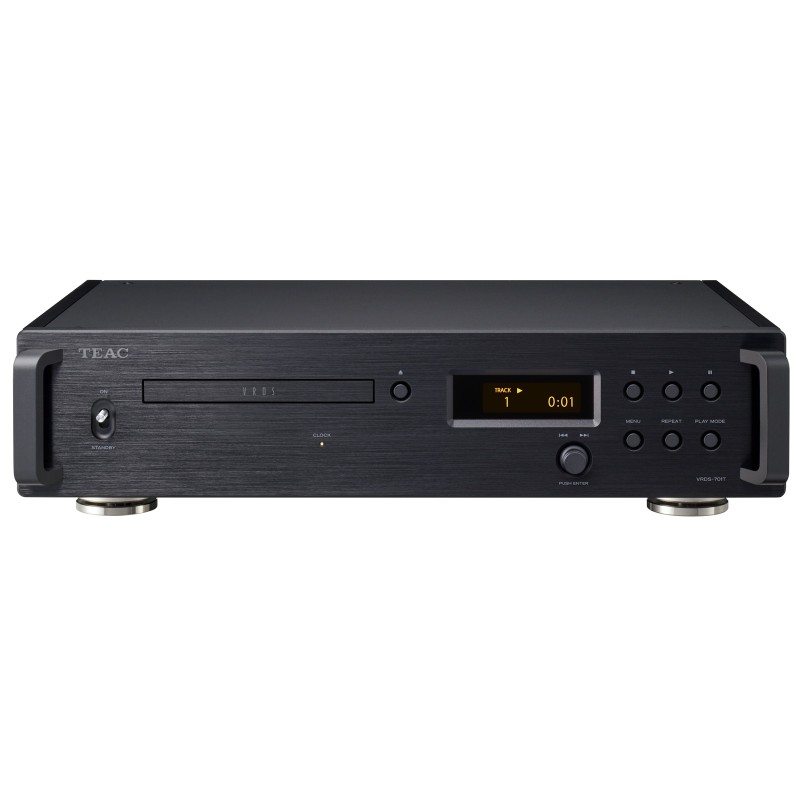
Starting with a drive we developed that has a long record of use in professional applications, we added VRDS technologies, which are part of our TEAC legacy.
This TEAC-original CD drive mechanism reduces rotation vibration of the disc itself as well as unwanted mechanism vibration by clamping the CD to an aluminum turntable with the same diameter and maximizing inertial mass in order to stabilize rotation. Servo current is reduced with the turntable by correcting disc warping and distortion and improving the relative optical axis precision of the pickup and disc pit side. This realizes reduced disc reading errors and outstanding audio quality.
For the bridge that supports the turntable, we carefully selected lightweight materials that are very rigid and do not transmit vibration. By naturally settling vibrations quickly, we have realized a wide, dynamic sound. The bridge, which has a torus structure made of resin, is only fixed on one side, and propagation of vibration from the CD mechanism to the opposite side through the bridge is suppressed, so the entire mechanism minimizes unwanted sympathetic vibrations.
The entire CD mechanism is mounted on the sub-chassis in a semi-floating state. By controlling the transmission of vibrations between the CD mechanism and the chassis, the impact of sympathetic vibrations is abated, and natural playback sound is realized throughout the frequency range. By isolating motor vibrations from the main chassis, sympathetic vibrations within the chassis are prevented. At the same time, the CD mechanism is also isolated from external vibrations. Reading precision is also increased by isolating the CD mechanism from external vibrations.
By eliminating the DAC function, the internal circuitry has been optimized for digital output. We have pursued higher audio quality by, for example, using larger components that did not fit in more limited space.
The VRDS-701T has a built-in MQA core decoder and can digitally output MQA CDs at 88.2 kHz . Moreover, when used together with a DAC that has an MQA rendering function, playback using MQA full decoding is also possible.
The 10MHz clock input allows synchronization with an external clock. In addition to improving audio quality during playback with the VRDS-701T, this also enables synchronization of the entire system with a clock generator.

CD TRANSPORT MODEL